2026-10-23 ·
How To Spot Creosote Buildup Before It Becomes Dangerous
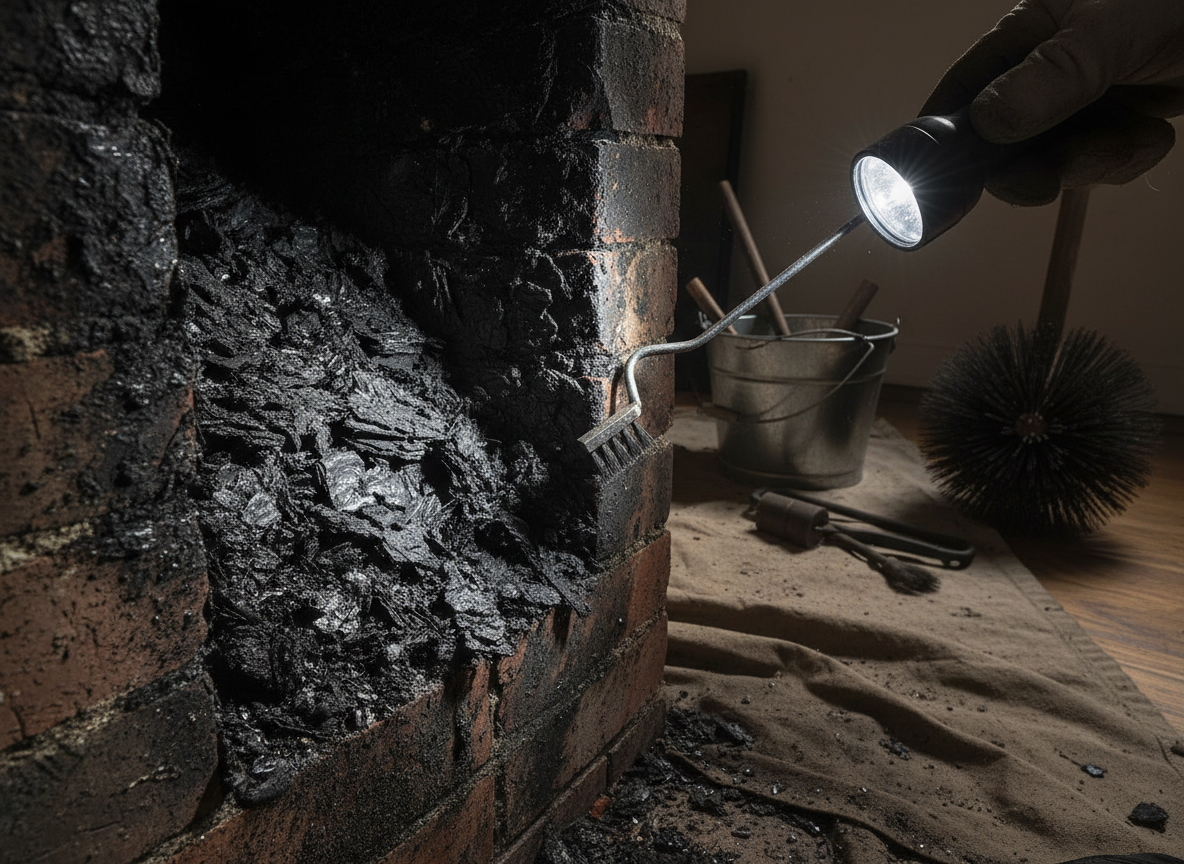
Creosote reaches dangerous levels once deposits hit 1/8 inch thick inside the flue, often within one heating season in Boone County homes. Homeowners in Union and nearby Ryle notice it first through visual checks at the damper or smoke chamber after burning seasoned hardwood. The humid subtropical climate keeps flues damper than expected even with mild winters, so moisture mixes with smoke and accelerates glazing on brick and metal liners.
Visual Checks at the Damper and Flue
Open the damper on a cold day and shine a bright flashlight upward from the firebox. Fresh creosote appears as shiny, tar-like streaks that feel sticky when touched with a gloved finger. Older buildup in homes around Union Community Park turns flaky and black with a honeycomb texture that flakes off easily. In brick chimneys common throughout Liberty Township, check mortar joints where creosote collects in corners and restricts draft. If you see any layer thicker than a nickel, schedule chimney cleaning service before the next fire. These inspections take only minutes yet reveal whether the flue needs professional attention from a local crew based at 10829 US-42.
Smell and Draft Changes Homeowners Notice
A sharp, acrid odor lingers in the living room even when the fireplace is cold, especially after humidity rises following a rain. Poor draft shows up as smoke rolling into the room instead of rising cleanly, a common complaint in older Union Center homes where chimneys have not been swept in two seasons. Residents near Florence and Burlington report the same smell intensifying on humid evenings because the subtropical air holds more moisture that reactivates creosote residues. Track these changes over a week of use rather than assuming one smoky fire means immediate danger.
How Local Weather Speeds Creosote Formation
Mild winters in Boone County still produce enough cool evenings to require fires, yet the humidity prevents complete drying of the flue between burns. This cycle leaves a thin film that hardens into Stage 2 or 3 creosote faster than in drier climates. Homes in West Union and East Union sit on slightly rolling terrain that can create variable wind patterns, sometimes pulling smoke back down the chimney and adding unburned particles. The result is faster glazing on both masonry and prefabricated liners, which is why many owners arrange chimney inspection service twice a year instead of once.
When Deposits Require Chimney Repair Near Me
Once creosote exceeds 1/4 inch or shows signs of glazing, the risk of a chimney fire rises sharply and simple sweeping may not restore safe draft. At that point, chimney relining or tuckpointing often becomes necessary to protect the structure. Owners in South Union and North Union who ignore these signs frequently face emergency chimney repair calls during holiday weekends. Checking the flue yourself every four to six weeks during active use helps catch the problem while it remains a maintenance item rather than a full restoration project.
Practical Next Steps for Union Homeowners
Keep a small inspection mirror and flashlight near the hearth so checks become routine. Note any changes in smoke color or fireplace performance in a simple log. When buildup appears or draft weakens, contact a 24/7 crew that serves the entire Boone County area from their Union location. Pair these checks with the advice in When To Schedule Chimney Repair Before Holiday Use to stay ahead of peak season demand. Regular attention keeps creosote manageable and protects the home without unnecessary expense.