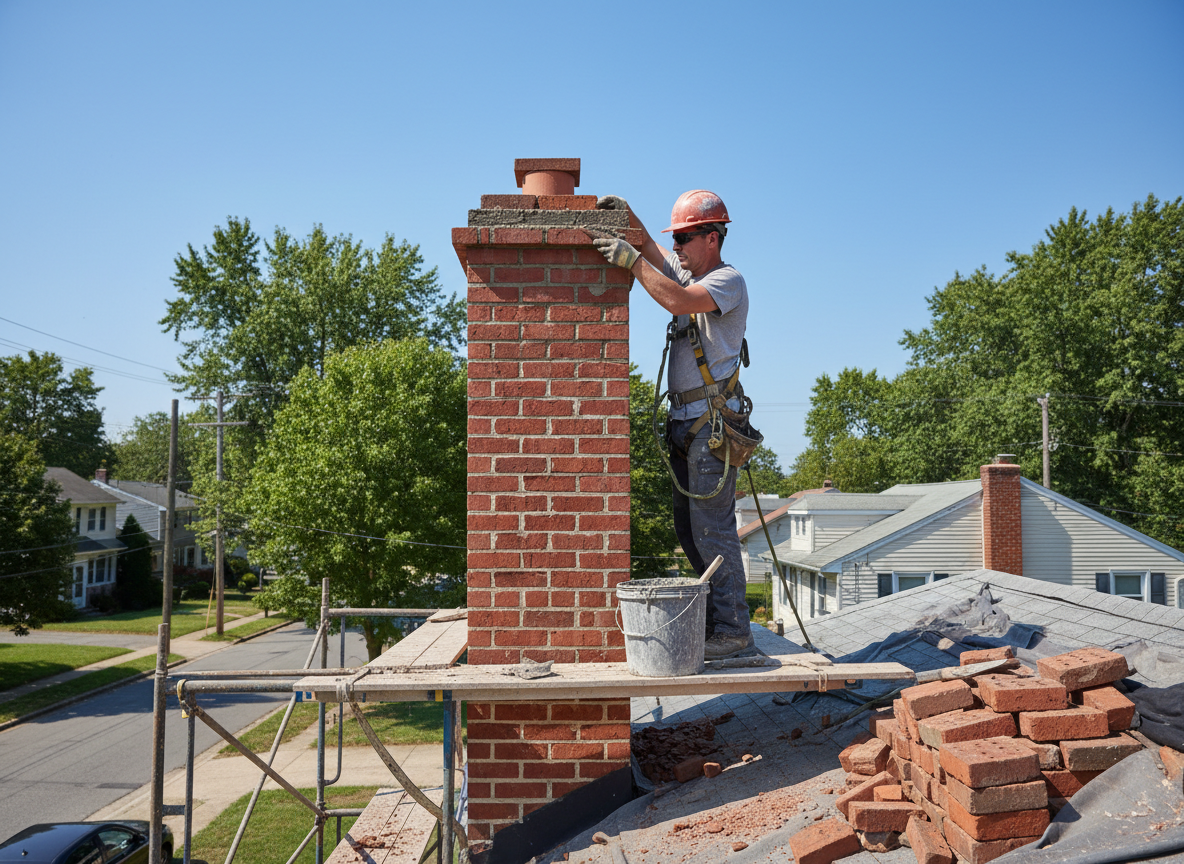
Union sits in Boone County where most brick chimneys date to the 1980s through early 2000s subdivisions around Ryle and near Union Community Park. The humid subtropical climate keeps mortar joints damp for long stretches, allowing efflorescence and gradual softening even without harsh freezes. Burlington and Florence crews see the same pattern: water enters through hairline cracks above the roofline, travels down the flue, and loosens bricks at the shoulder. Matching the original soft-fired brick and Type N mortar is essential; modern hard brick creates new stress points that crack within two seasons.
When we reach the job we first check the crown and flashing integration because those details fail first in Boone County’s mild but wet winters. Homeowners often notice white staining on interior brick or a musty smell after rain. We remove only the deteriorated mortar and brick, never the sound original work, then tool the joints concave to shed water. In Ryle neighborhoods with mature trees, root pressure can also shift foundations slightly, so we always verify the chimney remains plumb before closing the scaffold.
Code requires spark arrestors and proper termination height on any repaired chimney. We verify both while on site so the finished stack meets current Boone County requirements without extra permits. Homeowners in Union frequently ask about tuckpointing versus full rebuild; we explain that if more than one-third of the bricks are loose or spalled, rebuilding the top three courses prevents repeat calls within five years.
Technician insight
In Union the thing that catches most people out with brick chimney repair is the hidden water path behind the crown. Humidity keeps the mortar wet long enough that the crown cracks first, then water runs down inside the flue and softens the shoulder bricks no one sees until a leak appears in the attic.
Shoulder Leak Near Union Community Park
A Ryle homeowner noticed water stains on the family room ceiling after several days of rain. We found the crown had hairline cracks and the top three courses of brick had lost mortar on the south face. We removed the damaged courses, repointed the remaining stack with matching mortar, and rebuilt the crown with a proper slope. The leak stopped and the chimney passed inspection.
How it works
- 1
Site Assessment
We inspect the full height of the brick stack from crown to foundation, checking mortar condition, brick integrity, flashing, and plumb.
- 2
Material Matching
Original brick and mortar type are identified so replacement pieces blend with the existing chimney on Union homes.
- 3
Selective Repair
Deteriorated mortar is cut out and repointed; damaged bricks are replaced only where needed, preserving sound original work.
- 4
Final Verification
Crown, flashing, and termination height are confirmed before the crew leaves the 10829 US-42 address.
Pricing
Pricing varies with the height of the chimney, number of bricks requiring replacement, and whether scaffolding is needed on two-story homes common in Ryle.