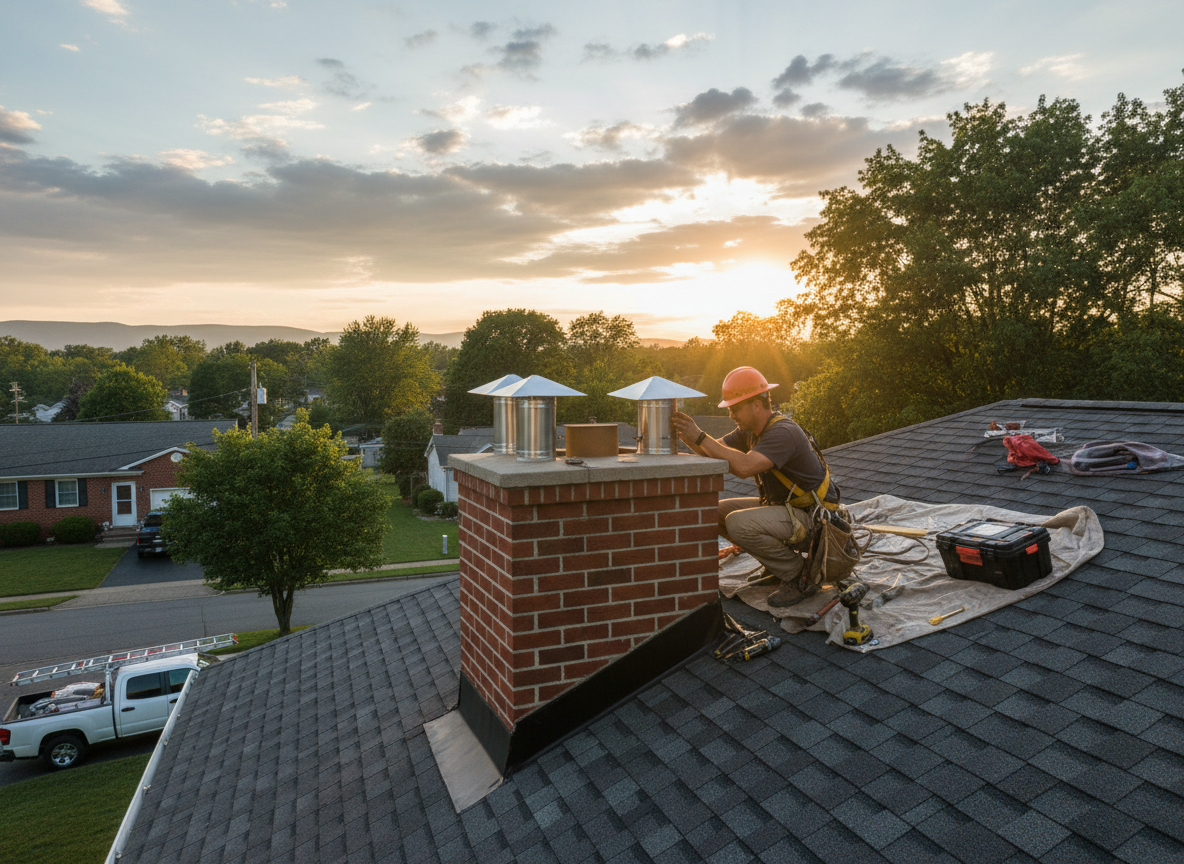
Union sits in Boone County where homes in the Ryle neighborhood and near Union Community Park often feature masonry chimneys built from the 1980s onward. These chimneys face constant exposure to humid subtropical air that carries moisture year-round even though winters stay mild. A properly fitted cap prevents rainwater from entering the flue, which otherwise leads to creosote buildup and interior staining on the second floors common in two-story Union houses. Stainless steel or copper caps resist the occasional freeze-thaw cycles better than galvanized versions that show rust streaks within two seasons along US-42 corridors.
Installation requires precise measurement of the flue tile because many Union chimneys have non-standard openings after years of settling on the area's clay-heavy soils. We check for proper overlap on the crown and ensure the mesh screen blocks squirrels and birds that enter flues during the mild winter months when homeowners in Florence and Burlington run fewer fires. Skipping the step of sealing the cap base to the existing flashing allows wind-driven rain from summer storms to bypass the cap entirely and damage the smoke chamber below.
Homeowners sometimes attempt universal caps sold at big-box stores in Florence, but these rarely seat correctly on the older chimneys found along US-42. The result is vibration noise during high winds and gaps that let embers escape. Our process confirms the cap height meets basic clearance above the roofline so downdrafts common in the rolling terrain near Ryle do not push smoke back into living spaces during shoulder seasons.
Technician insight
In Union, the thing that catches most people out with chimney cap installation is how the clay soils around Ryle cause chimneys to settle unevenly over twenty years, so a stock cap never seats flat and lets water in during the frequent summer thunderstorms even though winters stay mild.
Cap Upgrade Near Union Community Park
A Union homeowner noticed water marks on the family room ceiling after spring rains. Inspection showed the original galvanized cap had rusted through at the seams. We removed it, fitted a stainless cap sized to the settled flue, and sealed the base. The ceiling stains dried out and no further moisture appeared during the next heavy rain.
How it works
- 1
Site Assessment
We measure the flue, inspect crown condition, and note any existing flashing issues on Union and Ryle chimneys.
- 2
Material Selection
Recommend stainless or copper based on exposure to Boone County humidity and proximity to trees that drop debris.
- 3
Old Cap Removal
Carefully detach the existing cap without disturbing the crown or introducing cracks that allow water entry.
- 4
New Cap Fit and Seal
Position the custom cap, secure it, and seal the base to prevent wind-driven rain common in the region.
- 5
Final Check
Verify mesh integrity and confirm no gaps remain that could admit animals or moisture.
Pricing
Cost depends on flue size, cap material, and any crown repairs needed; we provide upfront quotes before work begins.