Union sits in Boone County where humid subtropical conditions combine with mild winters to keep chimneys damper longer than in colder regions. This moisture mixes with wood smoke to form creosote faster on masonry flues common in Ryle and older Union neighborhoods near Union Community Park. Homeowners along US-42 often see buildup on the south-facing sides of chimneys because prevailing winds push smoke against cooler flue walls.
Many homes between Union and Florence still rely on original brick chimneys that have settled unevenly over decades. When we clean these, we watch for hairline cracks at the crown and flashing points where rainwater enters and accelerates deterioration. The flat terrain around Burlington means less wind-driven rain but more standing moisture in the flue during extended humid periods, so we always check for hidden water stains before brushing.
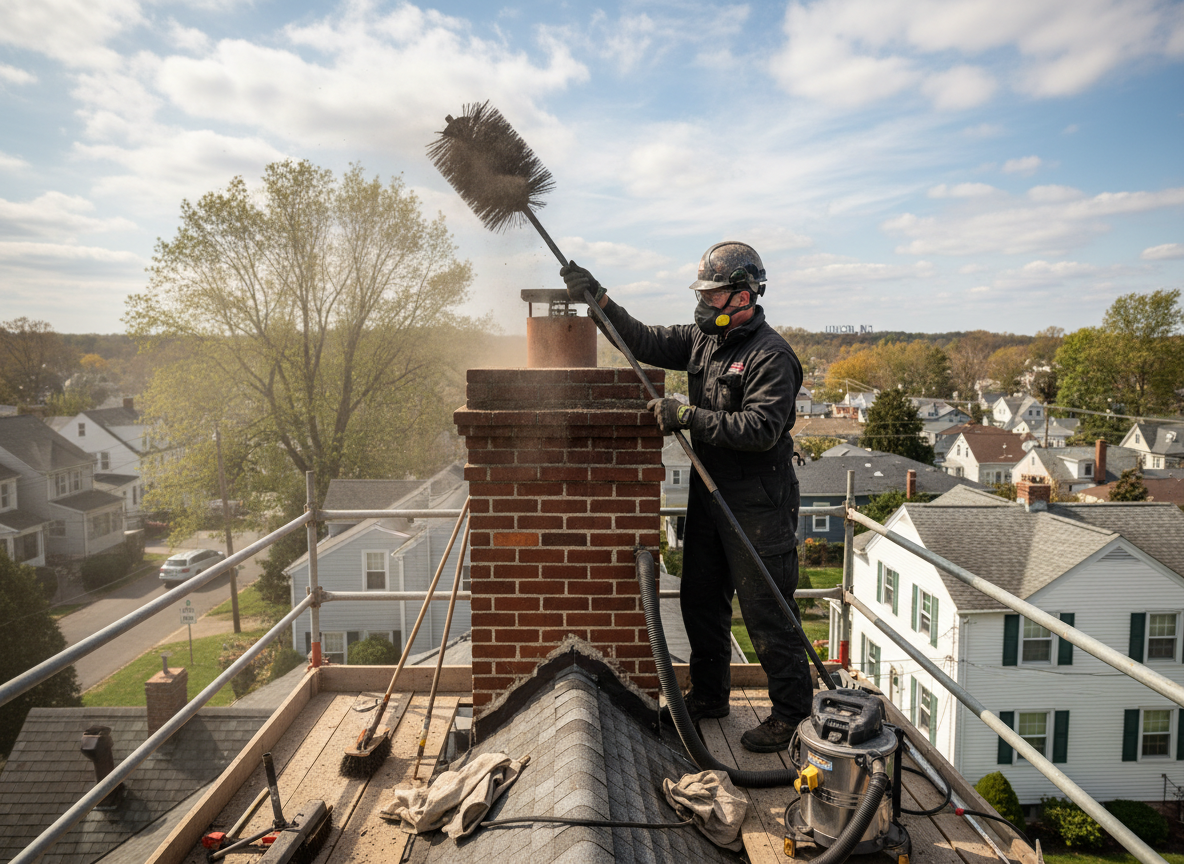
Cleaning starts with a top-down inspection using mirrors and lights to map creosote levels without disturbing the flue. We then use rotary brushes sized to the chimney diameter, followed by a HEPA vacuum at the base to capture fine particles that would otherwise settle in the firebox. After brushing we examine the smoke chamber and damper for warping that mild winters rarely fully dry out, then confirm draft before leaving the site.
Residents in Ryle frequently burn seasoned hardwood yet still develop glazed creosote because overnight humidity spikes re-wet the flue walls. We recommend scheduling after any extended stretch of mild, damp weather rather than waiting for visible smoke issues.
Technician insight
In Union, the thing that catches most people out with chimney cleaning service is how mild winters let humidity linger inside masonry chimneys on older Ryle homes, turning light creosote into hard glaze before spring. Homeowners near Union Community Park often wait until they smell smoke in the house instead of scheduling after the first warm, damp stretch along US-42.
Glazed Creosote in Ryle Chimney
A Union homeowner near Ryle noticed slow draft on cool evenings. We found stage-two glazed creosote throughout the flue caused by repeated mild-winter humidity cycles. Rotary brushing plus targeted scraping cleared the glaze and we confirmed the crown was still sealing properly. Draft returned to normal and the homeowner scheduled annual service before the next humid period.
How it works
- 1
Initial Inspection
We examine the chimney exterior and interior from the roofline down to the firebox, checking for cracks, crown condition, and creosote thickness in Union homes.
- 2
Creosote Removal
Rotary brushes sized to the flue clear built-up deposits while a HEPA vacuum captures particles before they reach living spaces near US-42.
- 3
Flue and Damper Check
We inspect the smoke chamber and damper operation, noting any moisture damage common after Boone County's humid periods.
- 4
Final Draft Verification
A test fire confirms proper draft before we clean up and provide a written report for the homeowner.
Pricing
Cost depends on chimney height, number of flues, and creosote level; most Union jobs fall into a standard range but vary with access and condition.