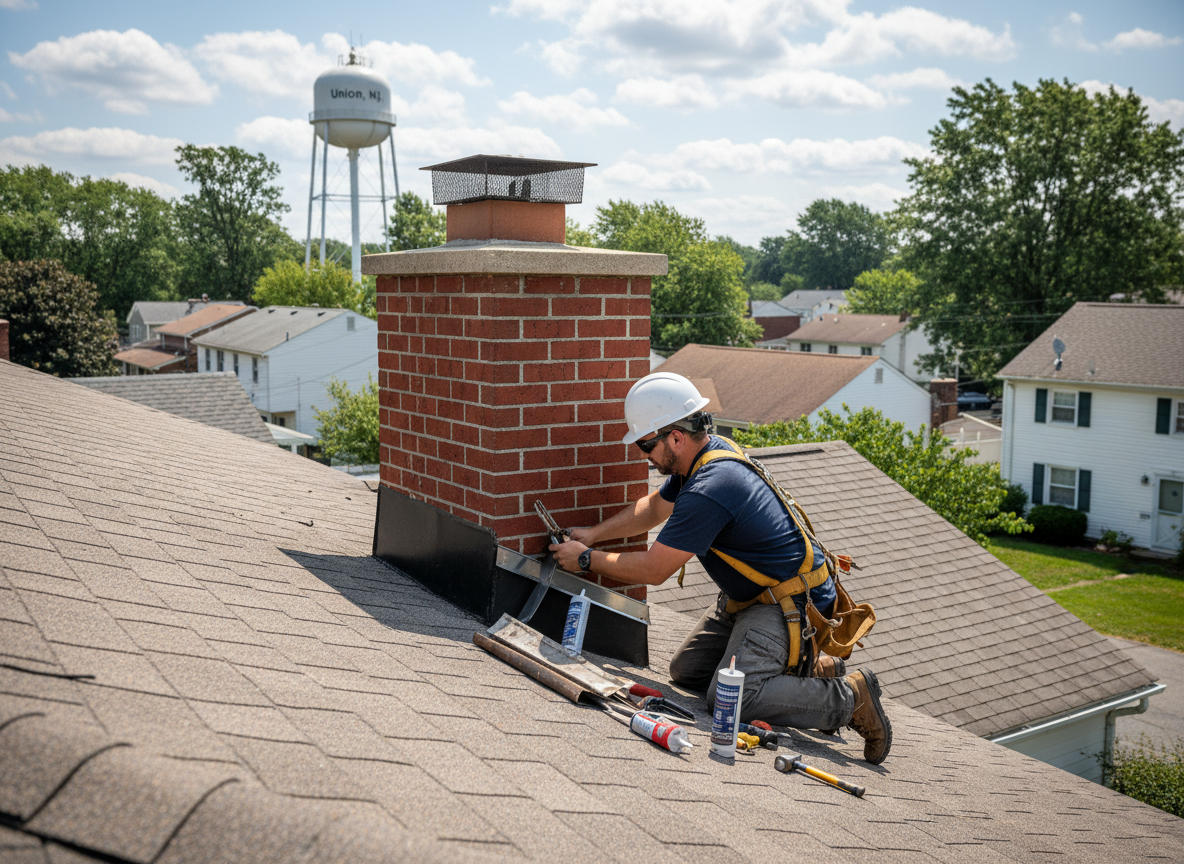
Chimney flashing in Union homes must handle the humid subtropical climate where even mild winters allow repeated freeze-thaw cycles that loosen step flashing and counter flashing. Older roofs in the Ryle area often use asphalt shingles that expand and contract differently than the metal flashing, creating small gaps that let water track behind the chimney and into attics. We use 26-gauge galvanized or copper step flashing tucked under the shingles and sealed with high-temperature silicone to match the existing roof slope and wind exposure common along US-42 corridors.
Water intrusion here is worsened by Boone County’s clay-heavy soils that hold moisture against foundations for days after rain, increasing hydrostatic pressure that pushes leaks downward through any compromised flashing. Proper cricket installation behind the chimney is essential on homes with steeper pitches found in newer Union subdivisions, preventing ice damming during the occasional winter cold snap. We always check for rotted sheathing and replace it with pressure-treated lumber before reinstalling flashing to avoid callbacks from hidden decay.
Local Weather Impact on Flashing
Union’s mild winters reduce ice dam frequency compared to northern Kentucky but increase the number of wet days that test sealant joints. Homes near Florence and Burlington experience more wind-driven rain, requiring wider overlap on the flashing seams and additional fasteners into the brick or stone veneer typical of local construction.
Common Failure Points
Flashing often fails where it meets the chimney crown because homeowners apply standard caulk that cracks under heat cycling. We install a proper chimney cap with a cricket and use lead or copper step flashing folded into the mortar joints for a lasting seal that withstands the area’s humidity.
Technician insight
In Union, the thing that catches most people out with chimney flashing repair is how the clay soils around homes near Union Community Park stay saturated for days, pushing moisture up under the flashing even during mild winters. Homeowners often skip the cricket behind the chimney and wonder why leaks return after the first heavy rain.
Flashing Leak on a Ryle-Area Roof
Homeowner noticed water stains on the attic ceiling after several wet weeks. Inspection showed rusted step flashing and missing cricket on a south-facing chimney. We removed the old metal, replaced rotted sheathing, installed new copper flashing with proper overlaps, and added a cricket. No further leaks reported after the next rain event.
How it works
- 1
Site Inspection
Examine flashing, shingles, and chimney crown for gaps, rust, and water stains while noting roof pitch and nearby tree cover in Union neighborhoods.
- 2
Material Removal
Carefully lift shingles and extract old flashing without damaging the roof deck, checking for rotted wood caused by prolonged moisture in Boone County clay soils.
- 3
New Flashing Installation
Install step and counter flashing with proper overlaps, sealed edges, and cricket where needed to handle local wind and rain patterns.
- 4
Final Seal and Test
Apply high-temperature sealant, reinstall shingles, and run a water test to confirm no leaks before leaving the site.
Pricing
Upfront quotes after on-site inspection; cost driven by roof access, extent of deck damage, and material choice.