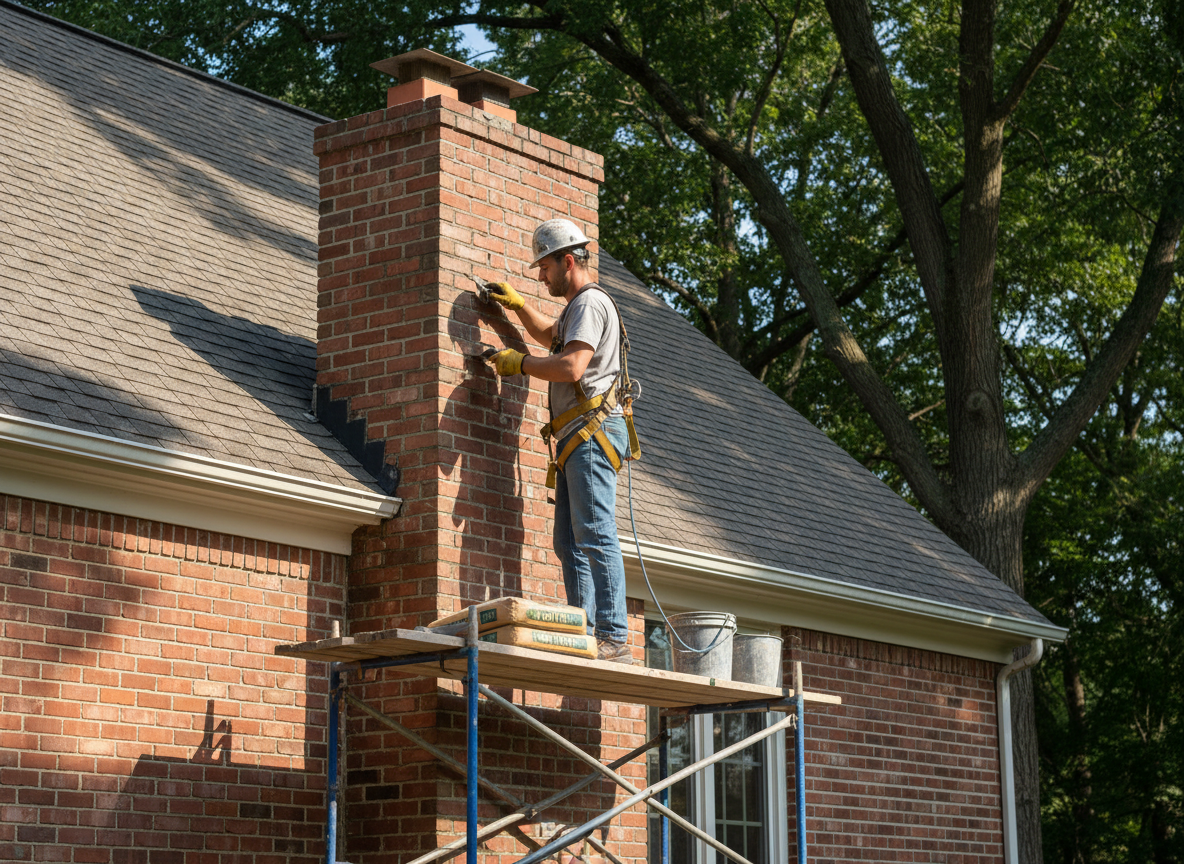
Union sits in Boone County where humid subtropical conditions keep brick chimneys damp for long stretches even during mild winters. Mortar joints on homes built in the 1980s and 1990s around Ryle often show hairline cracks first at the crown and flue interface because moisture never fully dries before the next rain. We repoint using type N mortar matched to the original lime content so the new joints flex with the brick instead of pulling away again. Homeowners near Florence and Burlington frequently discover the damage only after water stains appear on interior ceilings, which means the repair must also include flashing checks at the roofline to stop the leak path.
Mortar repair here is rarely just cosmetic. The clay-heavy soils common in Union shift slightly with seasonal moisture, stressing chimney bases and opening vertical cracks that standard caulk cannot seal. We remove failed mortar to a minimum 3/4-inch depth, clean the joint with a diamond blade, and tool the new mortar concave to shed water. On two-story homes common along US-42, we stage from the roof rather than ladders to reach the full height without stressing the structure. Skipping this depth leaves thin surface patches that wash out within two seasons.
Edge cases we see involve chimneys that were parged years ago with cement-based coatings. Those coatings trap moisture against the brick and accelerate spalling once cracks form. When we encounter them we remove the parging first, then repoint the underlying mortar before any new coating. Code in Boone County requires proper termination height above the roof plane; we verify this during every repair so the finished chimney meets current standards without adding unnecessary height.
Mild winters reduce freeze-thaw cycles but increase the time mortar stays saturated, so we schedule work when forecasts show at least three dry days. This allows the new mortar to cure before heavy humidity returns. We also inspect the crown for hairline separation because a failing crown lets water run straight down the flue and undermines the new pointing from inside the stack.
Technician insight
In Union, the thing that catches most people out with chimney mortar repair is the slow moisture retention from our humid subtropical climate on pre-2000 brick homes in Ryle. Homeowners assume mild winters mean no damage, yet joints stay damp long enough for hairline cracks to widen from the inside out before any freeze occurs.
Crown separation on a two-story home near Union Community Park
Water stains appeared on the second-floor ceiling after several weeks of heavy spring rain. Inspection showed the crown had pulled away from the flue tile, allowing water to run down the inside of the stack and push mortar joints outward. We removed the loose crown material, repointed the upper four feet of the chimney, and rebuilt the crown with a proper drip edge. The leaks stopped and the interior stains dried without further interior work.
How it works
- 1
Site Inspection
We examine every joint from crown to roofline, note crack patterns, and check for interior water stains on homes in Union and Ryle.
- 2
Mortar Removal
Failed mortar is cut out to adequate depth with a diamond blade, joints are cleaned of dust and debris, and the chimney is photographed for the homeowner.
- 3
Repointing
Type N mortar is placed and tooled concave. We work in sections so the mortar can set before we move to the next elevation.
- 4
Final Check and Cleanup
We verify water shedding, clean the roof and yard, and walk the homeowner through the completed work from 10829 US-42.
Pricing
Upfront quote after inspection; price varies with chimney height, number of elevations, and whether crown work is needed.