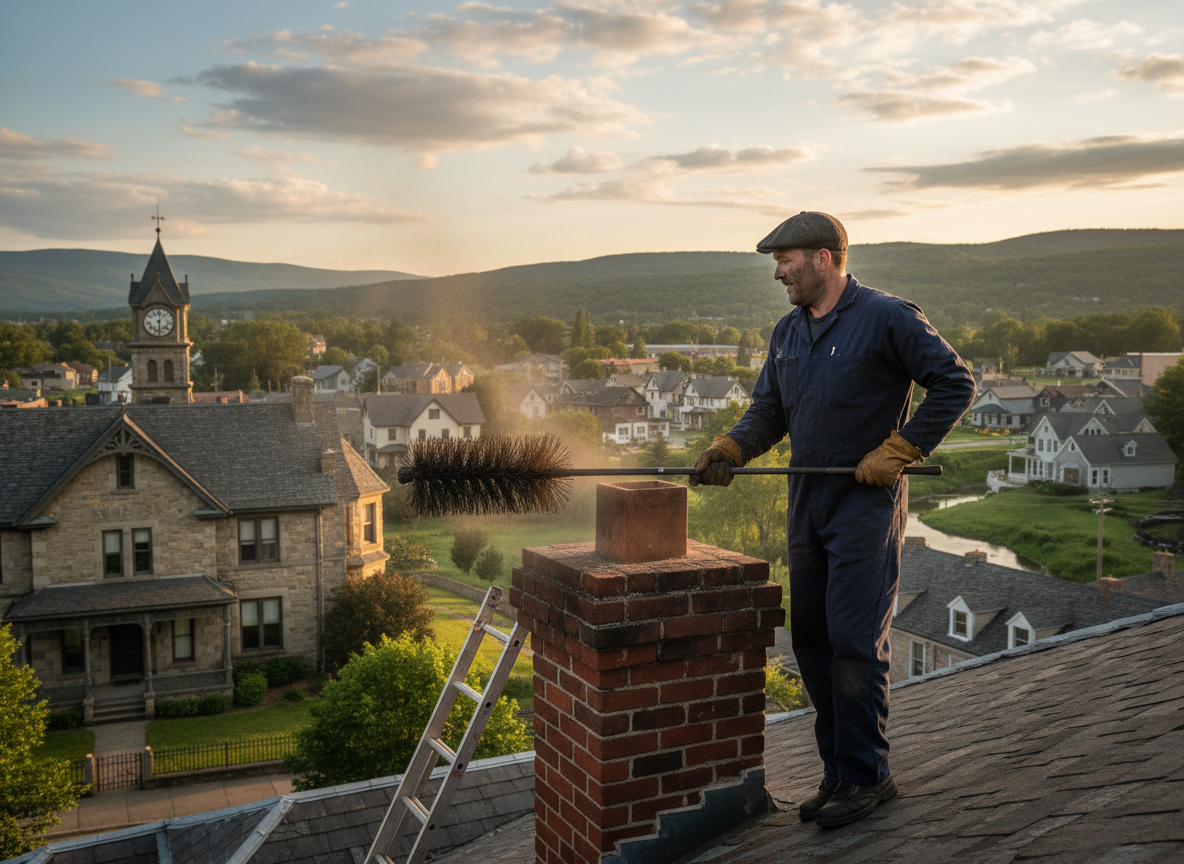
Union sits in Boone County with a mix of older brick homes in Ryle and neighborhoods near Union Community Park that see steady fireplace use even during the region's mild winters. Humid subtropical air keeps moisture levels higher, which can combine with wood smoke to form sticky creosote layers faster than in drier climates. Sweep crews working these chimneys routinely deal with narrow flues in 1970s-1990s construction where access points are limited and liner condition varies widely between properties.
Proper sweeping here starts with a top-down brush sized to the flue, followed by vacuum removal of debris that often includes pine needles and leaves blown in from nearby wooded lots. Technicians check the smoke chamber and damper for warping caused by repeated freeze-thaw cycles, even if winters stay mild. Homeowners along US-42 frequently request sweeps before fall because summer humidity allows mold to develop on cooler interior surfaces when the fireplace sits idle.
Skipping annual cleaning in this area risks blocked draft that sends smoke into living spaces, especially in two-story homes common around Florence and Burlington borders. We always verify the chimney cap remains secure against heavy spring rains that can force water down uncapped flues. Real-world jobs show that homes within a few miles of Union Community Park accumulate more bird nesting material due to nearby open green space.
Technician insight
In Union, the thing that catches most people out with chimney sweep near me is how mild Boone County winters let homeowners run fires more often without noticing the steady creosote buildup, especially on older brick chimneys around Ryle where summer humidity keeps liners damp and sticky residue harder to remove later.
Slow Draft in Ryle Chimney
A homeowner near Union Community Park reported weak draft and occasional smoke spillage. Inspection showed moderate creosote coating the flue walls plus a partially blocked cap from leaf debris. We performed a full top-down sweep and cleared the cap. Draft returned to normal and the fireplace operated cleanly.
How it works
- 1
Site Assessment
Arrive at the Union address and inspect exterior and interior chimney condition, noting flue size, liner type, and any visible damage from local weather exposure.
- 2
Protection Setup
Cover hearth, floors, and furnishings with drop cloths and tape to contain soot during brushing, a step critical in finished basements common in Ryle homes.
- 3
Mechanical Sweeping
Run appropriately sized brushes from the roof or cleanout to dislodge creosote and debris, followed by HEPA vacuum extraction.
- 4
Final Check and Report
Re-inspect for remaining buildup, test draft, and document findings for the homeowner before removing protective coverings.
Pricing
Upfront quotes provided after inspection; cost varies with chimney height, access, and creosote thickness.